Mothering myself (and my kids) in an age of uncertainty
The other day, during the mind-numbing half hour between 9 and 9.30pm, my own twilight zone after the kids have fallen asleep but before laundry’s been tackled, I was scrolling on my phone trying to sum up the will to carry on with the work. I came upon a touching reel of someone being given amazing news. I could see their reaction, the reaction of their family and I couldn’t help but feel warm and happy for them. Then I opened the comments (I recommend doing this) and I saw the first one, liked by a staggering amount of people.
‘Really cute. If it wasn’t AI.’
I paused. I went back. I rewatched the reel. I opened the comments. More AI claims, interspersed with kind messages of people who, like me, thought the whole thing wholesome and, well, real. I couldn’t believe it. I pride myself in having a good AI nose, if that’s a thing. I can tell, often straight away, whether something was made or written with AI but this was so… real. So convincing in its almost dirty quality, the rawness, the texture. And it might have been real – after all the comments were simply claims from Tom, Dick, Harry and anyone with access to an account and a keyboard. But that’s not the point. The point is the doubt, that lingering uneasy feeling that you’re watching something posing as factual, but which actually isn’t. This reel was harmless enough, it wasn’t trying to convince me of anything, but it still served as a bit of a wake-up call. Not only am I playing catch up with a technology that’s evolving quicker than I can breathe, I also have to question every single thing I’m consuming. Is this even real?
In a way I suppose, it’s the sign of the times. Chasing after efficiency over quality, standardisation over creativity. The sharp, square edge over the intricate curl. It’s so much easier to fabricate anything using AI. I mean look at the speed of execution, the almost perfect output. And it’s true – I am very much aware that if I want to remain employable and relevant, I need to adapt. I would be an incredible hypocrite if I said I do not see how applicable some of its uses are, how many hours of tedious data collection it saves me on the weekly. But I am also frustrated at how thin that tight rope is, how quickly you can fall into the trap of thinking AI can substitute anything. Including people.
A good friend of mine, an intelligent man with a sharp wit and an even wittier pen, who spent years honing his craft, cannot find a job. Apparently, AI can execute his skill better. Never mind the years of experience, the flavour he can add to his words, the uniqueness he brings. Not only can AI spin it just as well, they will claim, but it will spin it within seconds. Let’s pretend for a moment that this is evolution. Let’s assume that this is what our fathers and mothers went through with the age of computers, what their mothers and fathers went through with the industrial revolution. Can we safely say that any other evolution in history has happened this quickly? That you’re made to feel… redundant overnight? Because anyone with a half mind and a ChatGPT account feels he can do your job better than you, when yesterday they couldn’t even proofread their own words?
I chose to write about this not as some sort of scathing attack on AI. Resisting it completely is not only unrealistic but also silly. Just like the mobile phone, it has become a part of our life. We carry it with us, we consume it sometimes unknowingly or unwillingly, we use it in our favourite apps. No, I chose to write because I feel the need to be mothered. I am missing a nurturing, protective presence that I would usually find in myself but that I now have to relearn again. Because sometimes the use of AI feels less an optimisation and more a scary highjack, how it’s become our default for anything that needs answering. I need to mother myself because how do I mother my kids if I haven’t come to terms with it myself?
I am anxious. At work, I do my best to somehow weave my own expertise with AI, to use it while layering it with what I know and what I have seen work and not work. There is pressure to do things quickly, turn around times have shrunk to such a degree that even if I wanted the time to reflect, I’m hard put to find it. I used to be confident in my role, able to foresee what I might be doing in a years’ time. Now, I can’t see three months ahead. At home, I am a mother to two young kids. I, like many, studied, have built a career, slowed down to have a family, but now find I need to start running again or risk losing everything to the click of a button. My eldest has dreams of the future, my youngest is happy to live the next second and the next and the next. I watch them and for the first time, I have no idea what their future could look like. The uncertainty is palpable – what else will be made redundant in five years, in two, in one?
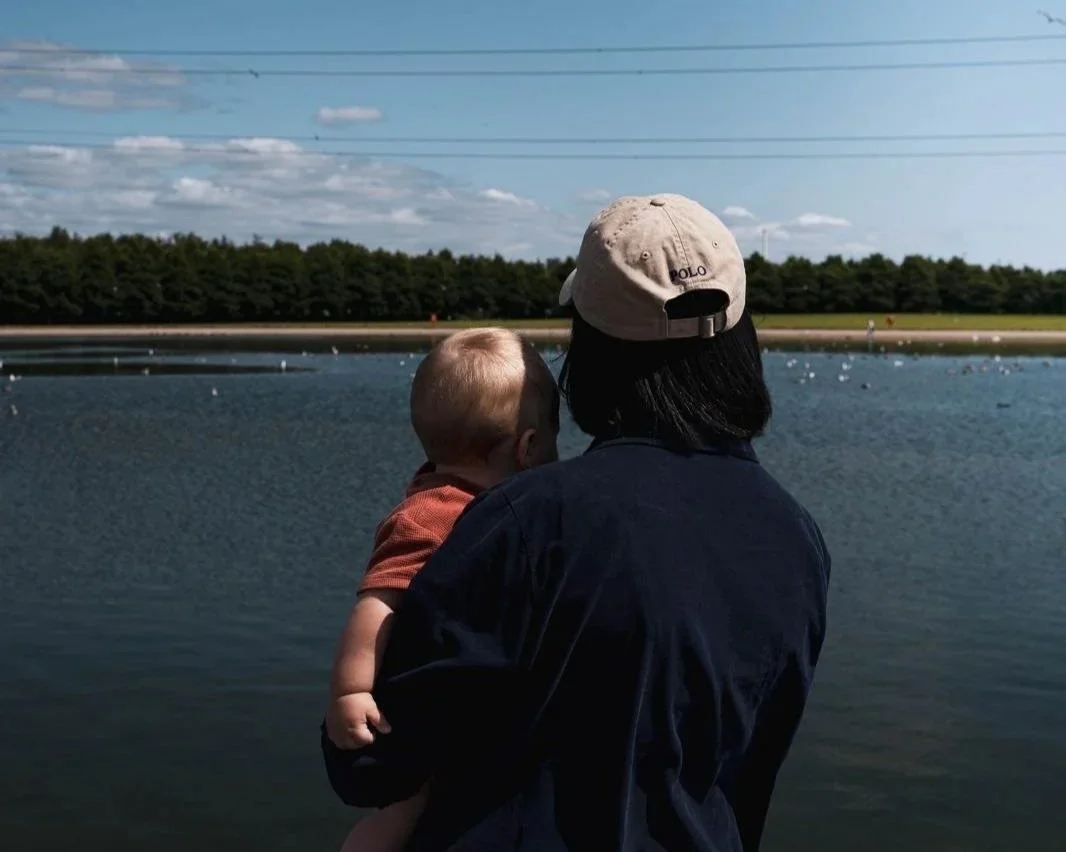
Image credits; Karl Baldacchino. Find him at kaarl.me
What will happen to the arts, that beautiful slice of humanity that exists so we can connect with other human experiences? In extreme cases, it already finds itself replaced by the glossy, flat, trash spewed by a machine with absolutely no idea of pain or grief or love or mothering. Spotify have removed 75 million “AI slop” music posing as tracks in the space of 12 months. The Commonwealth annual writing competition came under fire when the winners were accused of using AI to generate their entries. If you remove the human from art, a discipline that literally falls under the humanities, we’ve really lost sight of what it means to be.
Everything feels inverted suddenly, the real is fake and the fake celebrated, we’re rushing when we are meant to take it slow, we glorify the output but are indifferent to the process. Do you remember when at school we used to be encouraged to show our workings? So that, we’d be rewarded adequately if our workings showed the right train of thought? All of that is gone, thrown unceremoniously out the window. The result and the output is what matters because we let the machine do the thinking for us. But can’t we see how detrimental that will be? How our kids are being lulled into a complacency that will be their ruin? How their go-to is already “Let me ask chat” heedless to the benefits of just thinking and imagining. I hope we do. I really hope our schools see this, that they equip the kids with analytical thinking, with the confidence to assert their opinions, thoughts, feelings. That they teach them how AI can be used to assist and inspire, never to replace. Our collective imagination is already at risk. We don’t stop to observe, think or imagine anymore when we’re bored because our phones are endless sources of entertainment. Now layer that on with a machine that will do the imagination for you even when you have to imagine. What’s left of us then?
I don’t know what’s in store for us. It’s very likely that AI continues its freefall into unlimited applications, despite the protests, the gallons of precious water wasted on its data centers where water is most scarce. My husband, a massive pro-AI employer and father, thinks AI is the bridge across the ever yawning gap between demand and a dwindling population. That it will supply the workers when there are none. I argue that that this might be the case in 50 years’ time and he concedes we’re living in an age of collateral damage. That it will get better, but not just yet. I love how hopeful that sounds and I want to believe it… but 50 years is also an awfully long time.
So for now we wait, observe, and for people like me, live with the familiar flutter of anxiety. Elon Musk said he foresees an age of abundance (for him, for people like him? It is very unclear), that AI will do anything a human can do, except be human. And it is this, this tiny, crucial detail that we all seem to have forgotten amid the scrabble to be first in anything. That being creative, empathic, reflective, flawed, vulnerable, kind humans sets us apart. This is what I’m teaching my kids, so they might eventually realise the immense wealth of AI, the even greater store we have in our own selves and the responsibility to know when to choose which. That is what I am teaching myself. Otherwise, we’re no different than what we’ve created: efficient yet unfeeling, dull, with a propensity to hallucinate artificially intelligent machines.